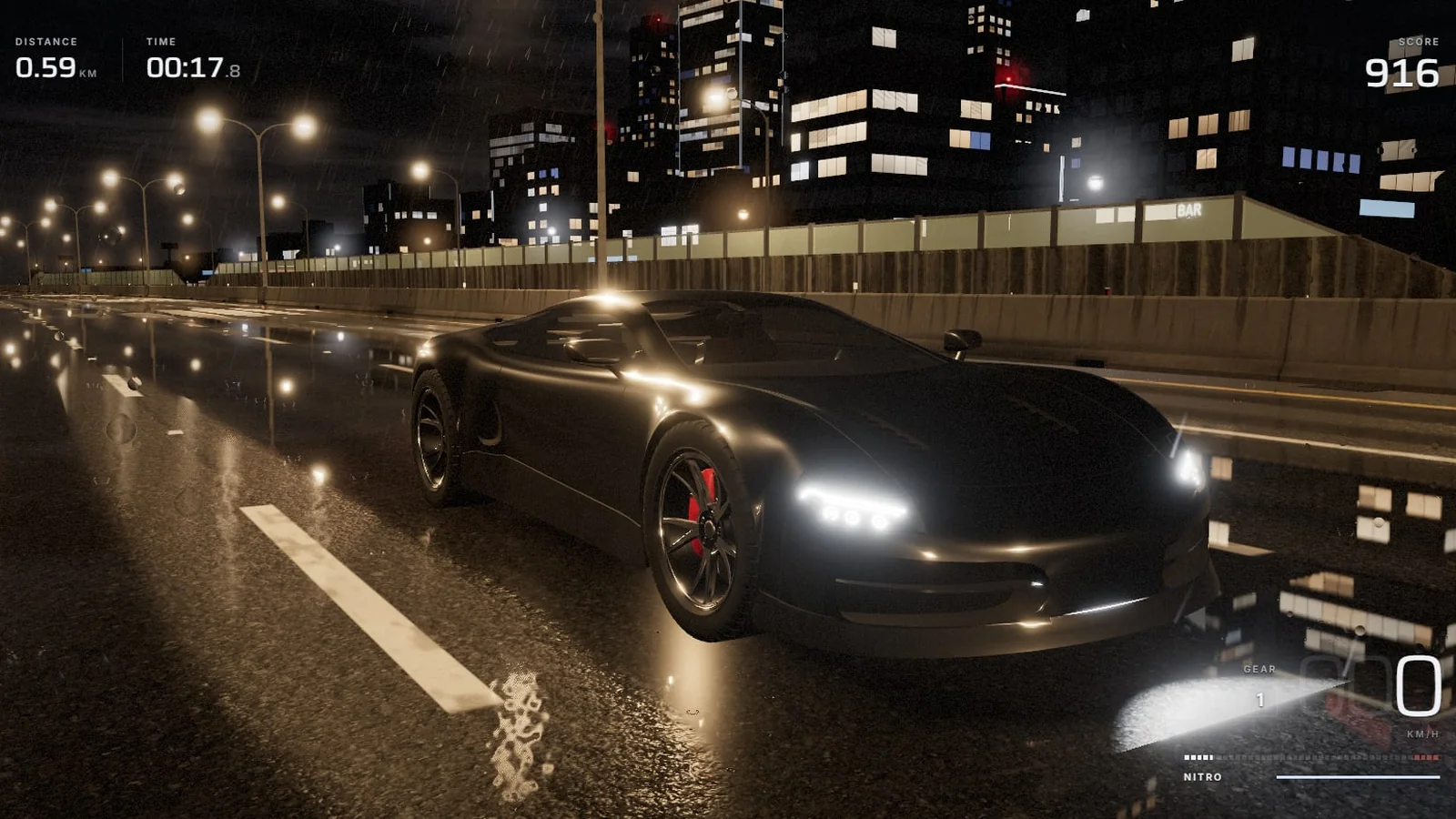
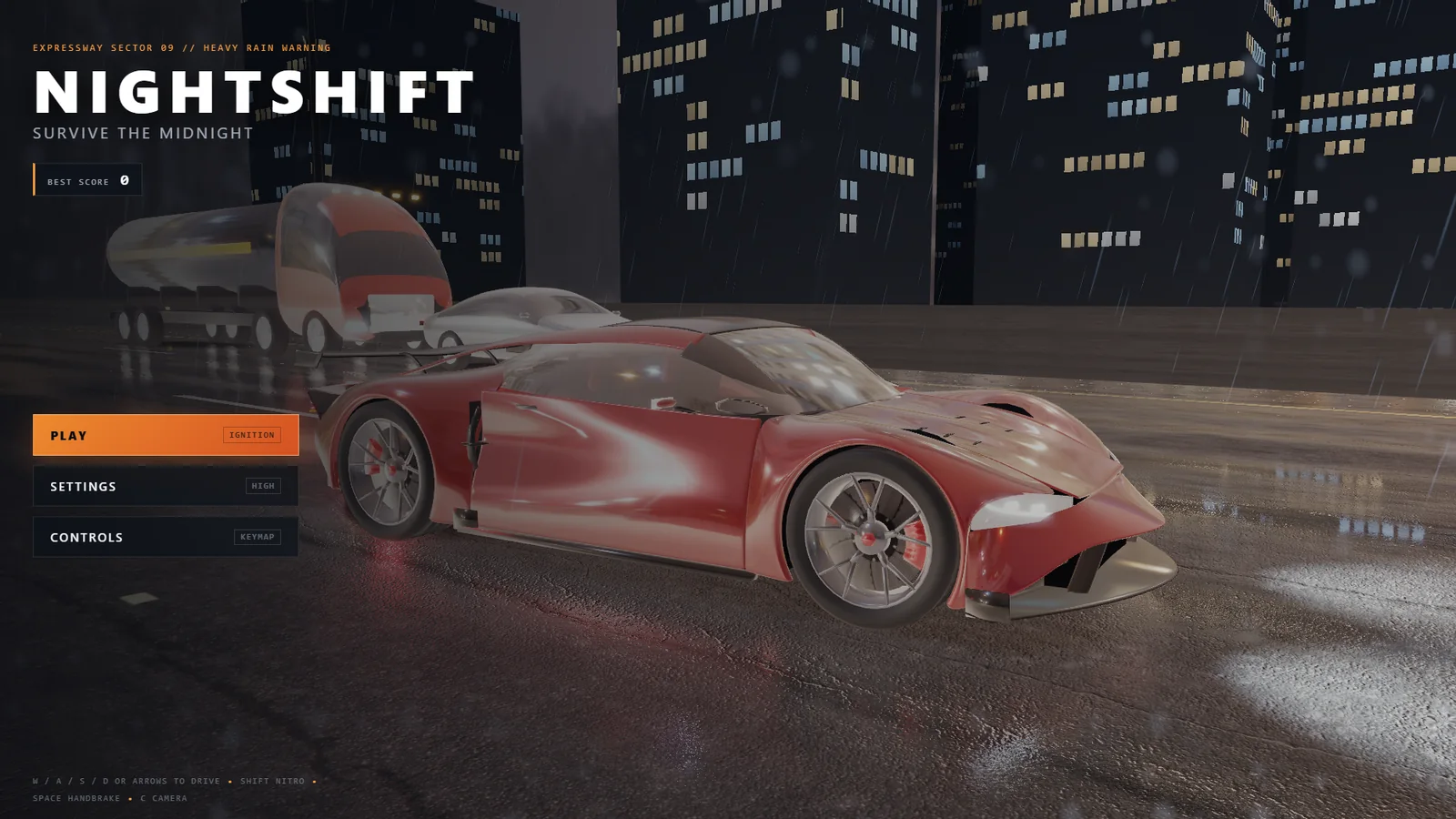
On 10 November I gave two AI agents the same long prompt. It asked for a driving game that runs in the browser, set on a highway at night in the rain and built with three.js, with traffic, crash physics and two scripted set pieces. As part of the game, each one also modelled its own player car from scratch in Blender with Python. No ready-made model.
One agent was Gemini 4 Carbon, the other Claude Fable 5.2. Gemini needed about 2 h 8 min for all of it, Fable about 16 h 36 min. I didn’t write a line of code for either. Both got the same single prompt.
What it took
| Gemini 4 Carbon | Claude Fable 5.2 | |
|---|---|---|
| Working time | ~2 h 8 min | ~16 h 36 min |
| API cost (estimate) | ~$10 | ~$300+ |
| Game code | 20 files, 7,705 lines | 119 files, 35,831 lines |
| Player car | 89,900 triangles, 2.48 MB | 129,824 triangles, 1.95 MB |
| What I gave it | One prompt: the game and its car | The same prompt |
| Code I wrote | None | None |
| Tool | Antigravity CLI | Claude Code, a lead agent with Opus 5.5 sub-agents |
| Effort setting | High | xhigh |
Fable doesn’t work alone in this setup. It plans the work and hands pieces of it to sub-agents running Opus 5.5, so when I write “Fable” I mean that whole team, and the bill is the team’s too.
Neither cost is exact. Google hasn’t published a price for Gemini 4 Carbon yet, so I used the $2 per million input tokens and $10 per million output tokens that third-party sites quote. Fable’s log shows $236, but two interrupted rounds never made it into the log, so I’d put the real figure a little over $300.
How they went about it
Gemini went from an empty folder to a playable game without asking me anything. The game is small, 20 source files, and most of the polish went into the wet road and the two set pieces, which is what the prompt cared about most. Its car came out of a single Blender script.
Fable treated the prompt like a project. It started by writing down how the modules should talk to each other, sent sub-agents off in waves to build rendering, physics, traffic, weather, audio and the UI, and then went looking for bugs. It also wrote a driver script that plays the whole game by itself. The nicest catch was a crash bug that only showed up sometimes: a traffic car that hit a wreck was added to the physics world with its position as its velocity, and flew a kilometre down the road.
Same moment, both games
From the menu to the game-over screen, with both set pieces in between. Each one is a slider.
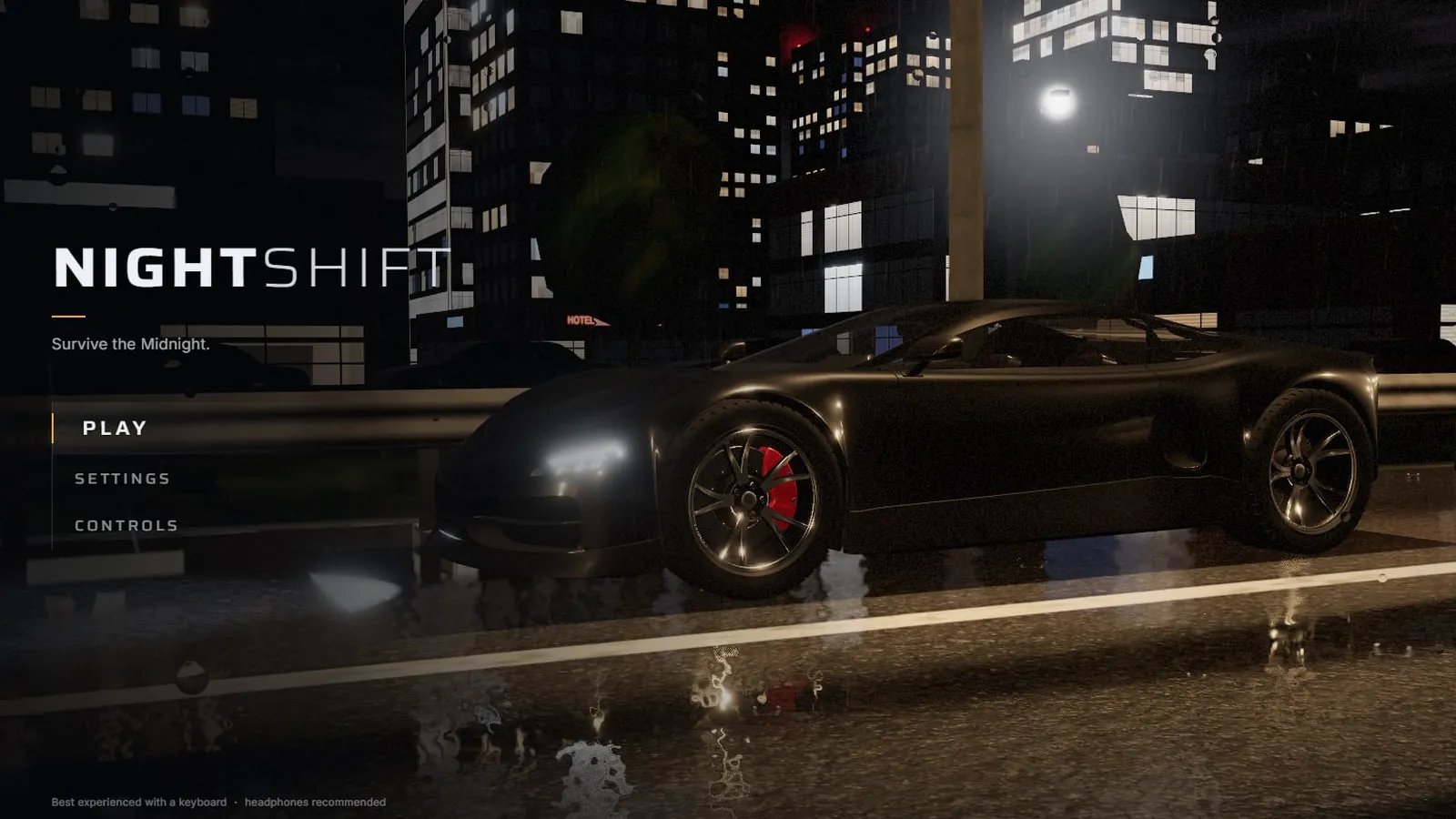
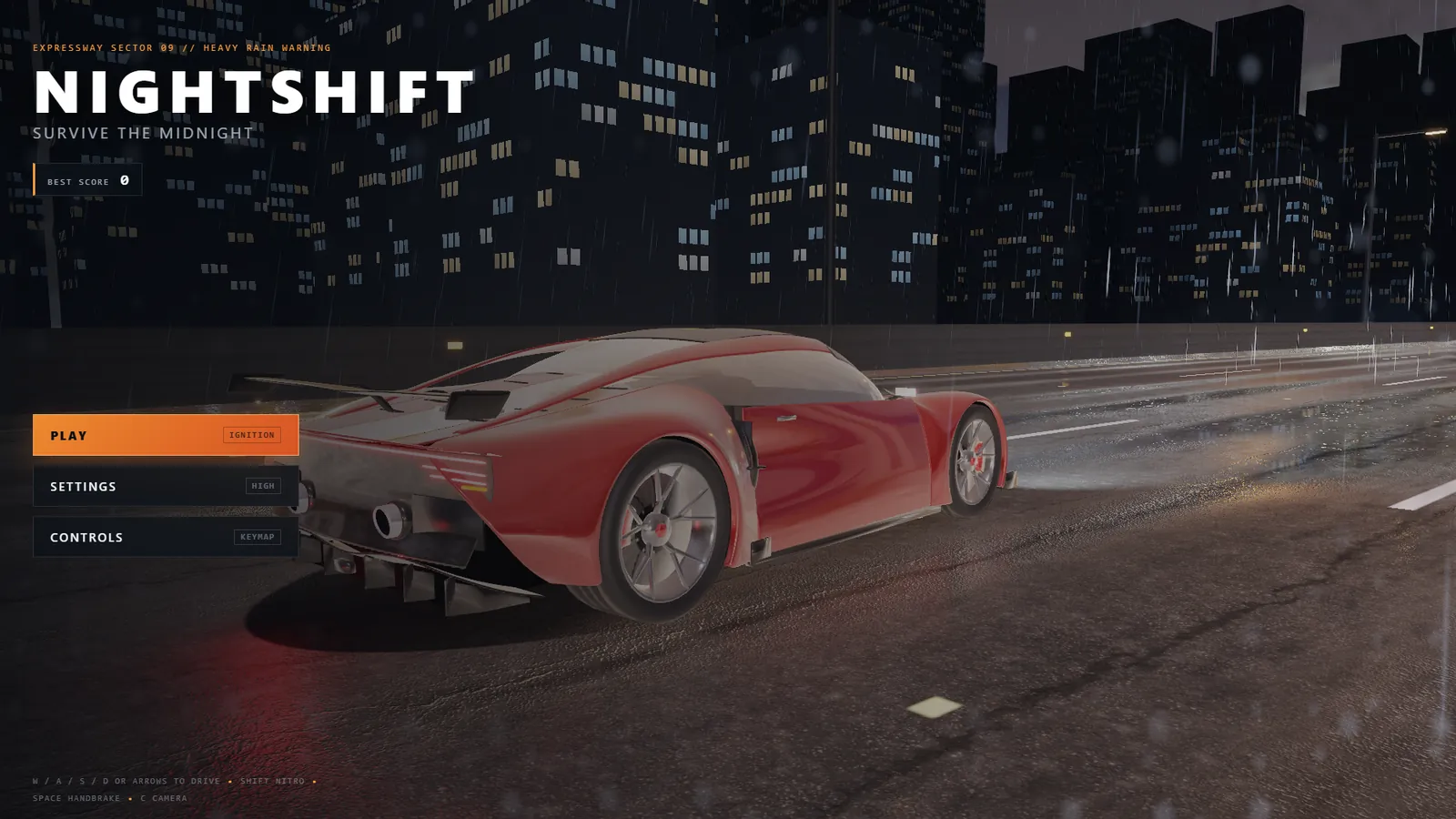
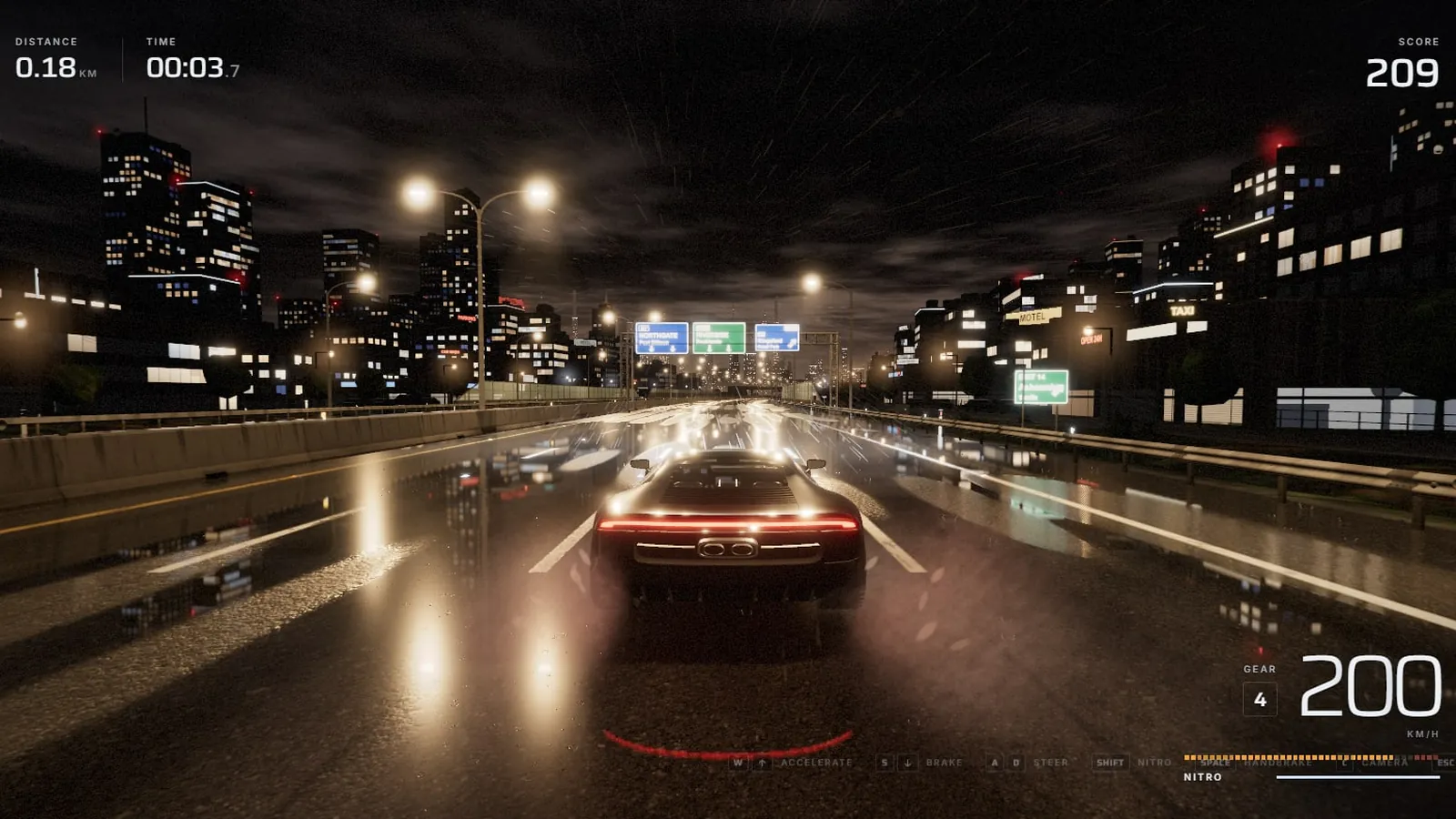
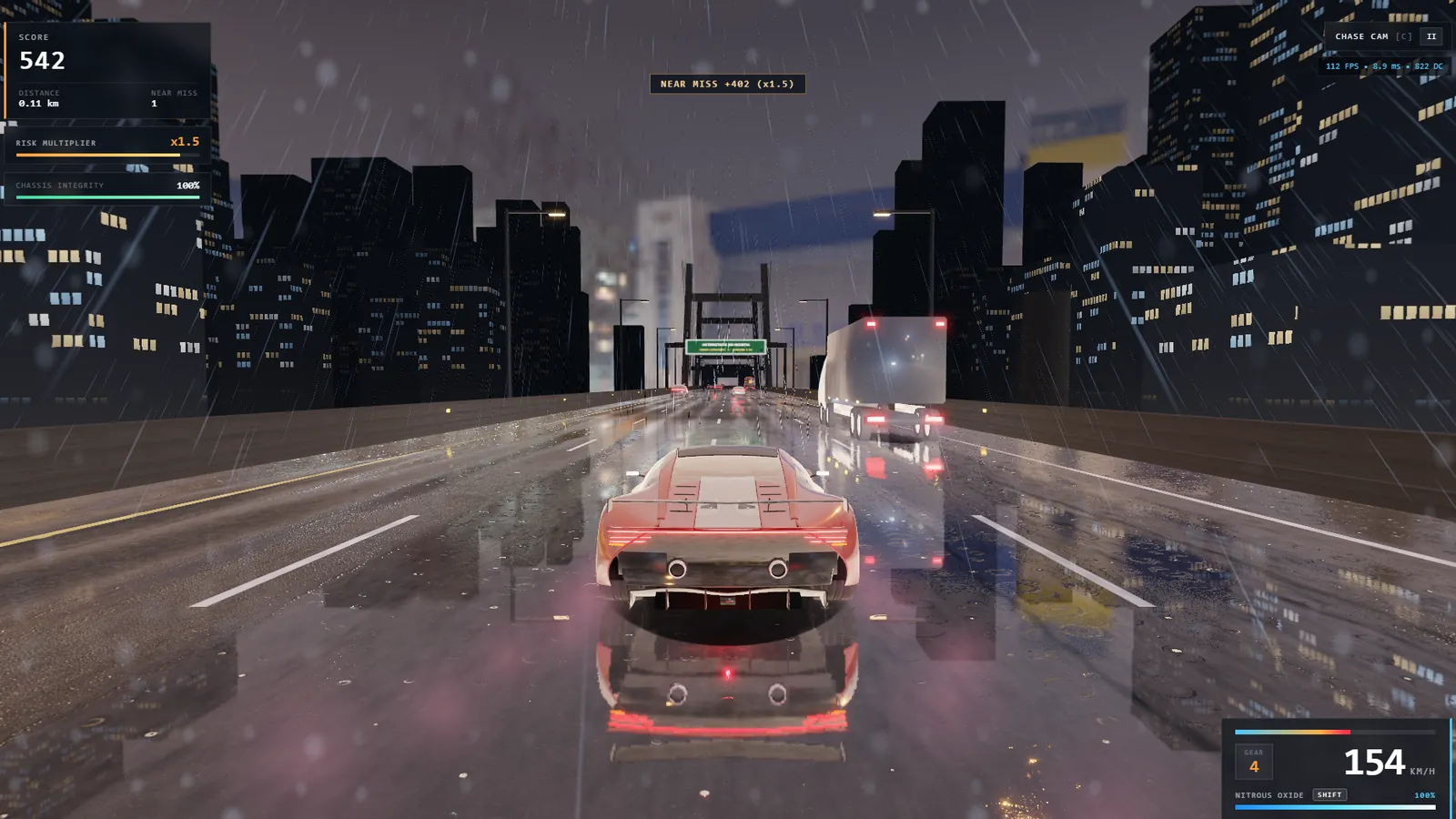
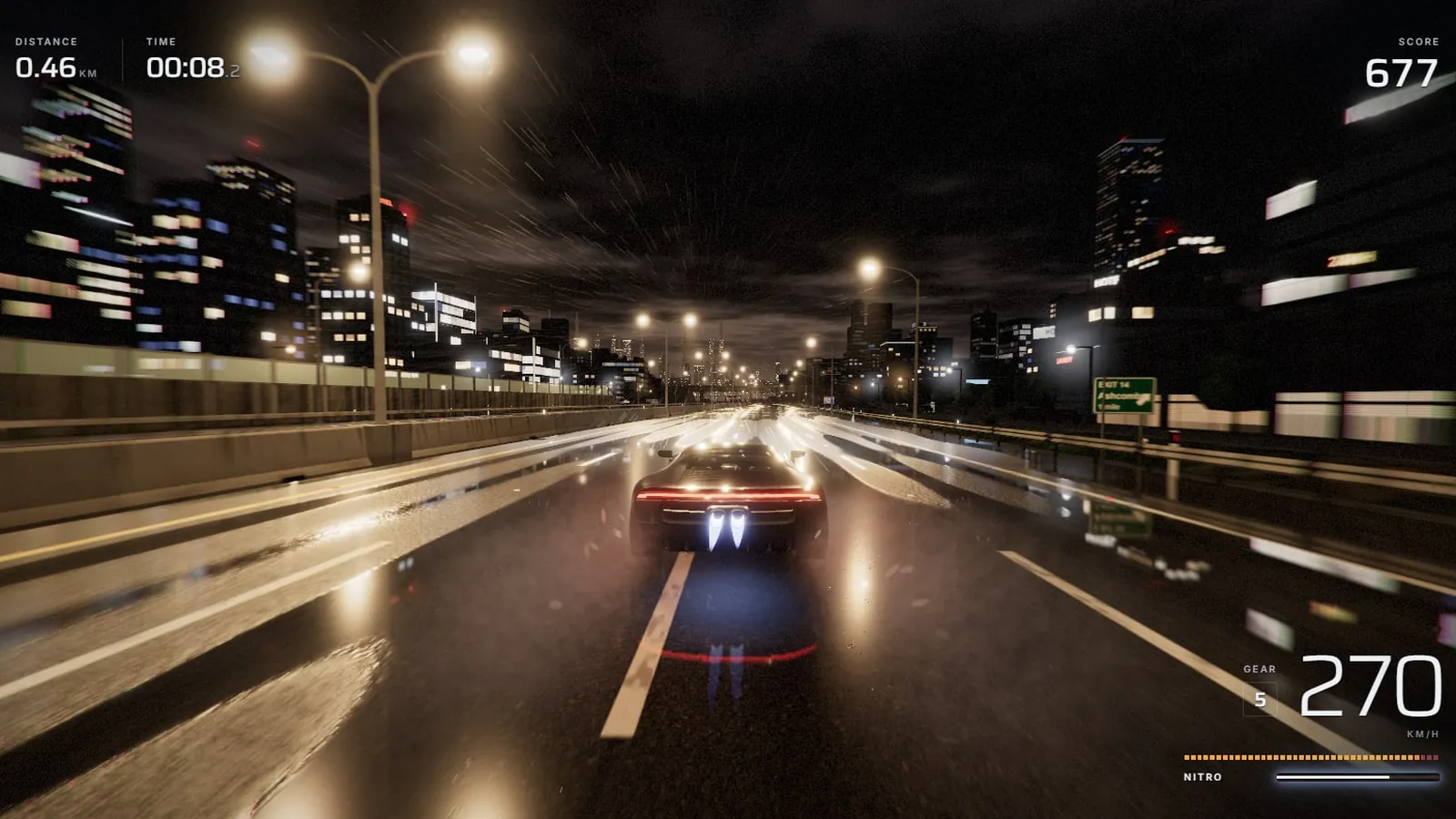
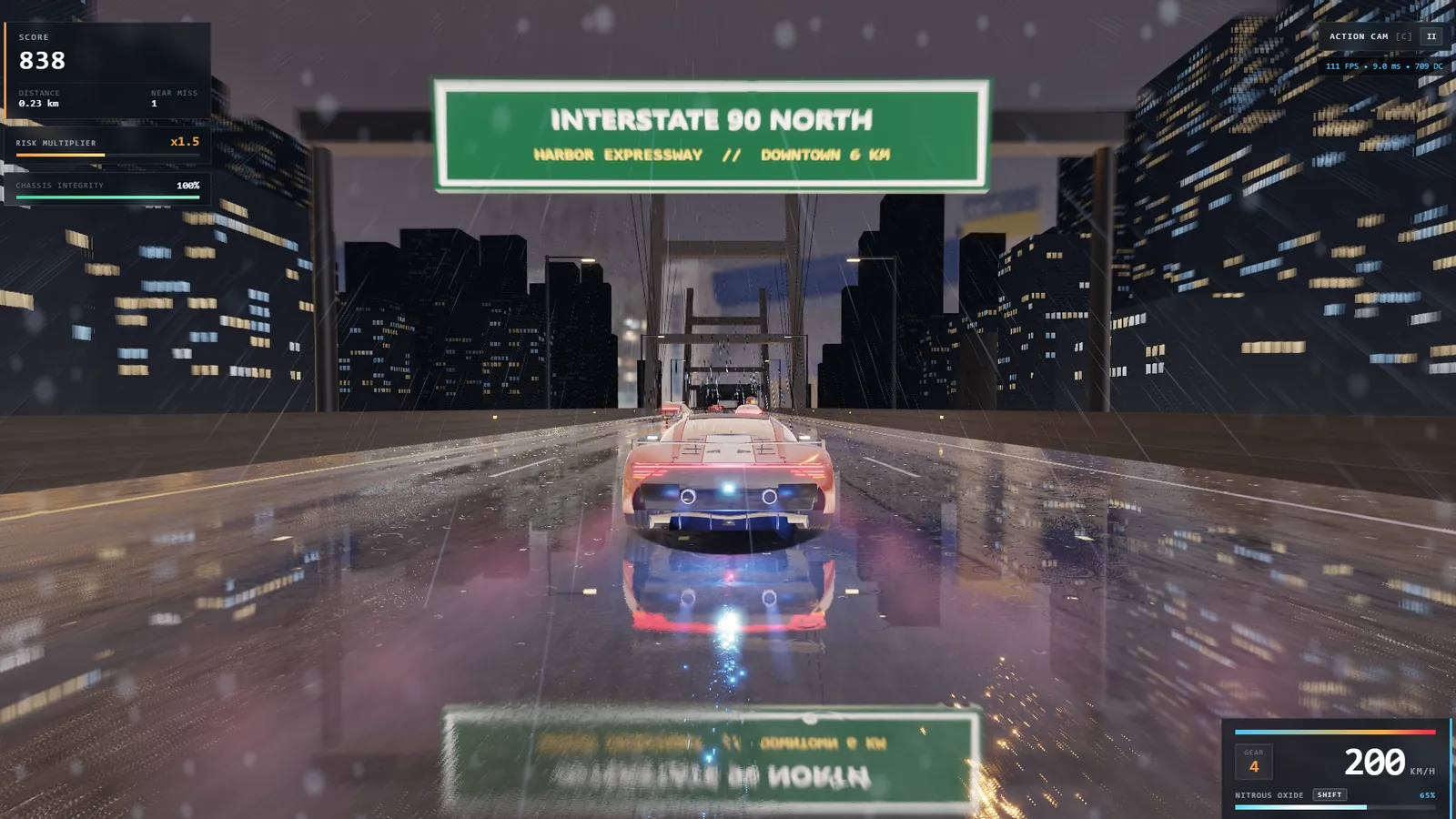
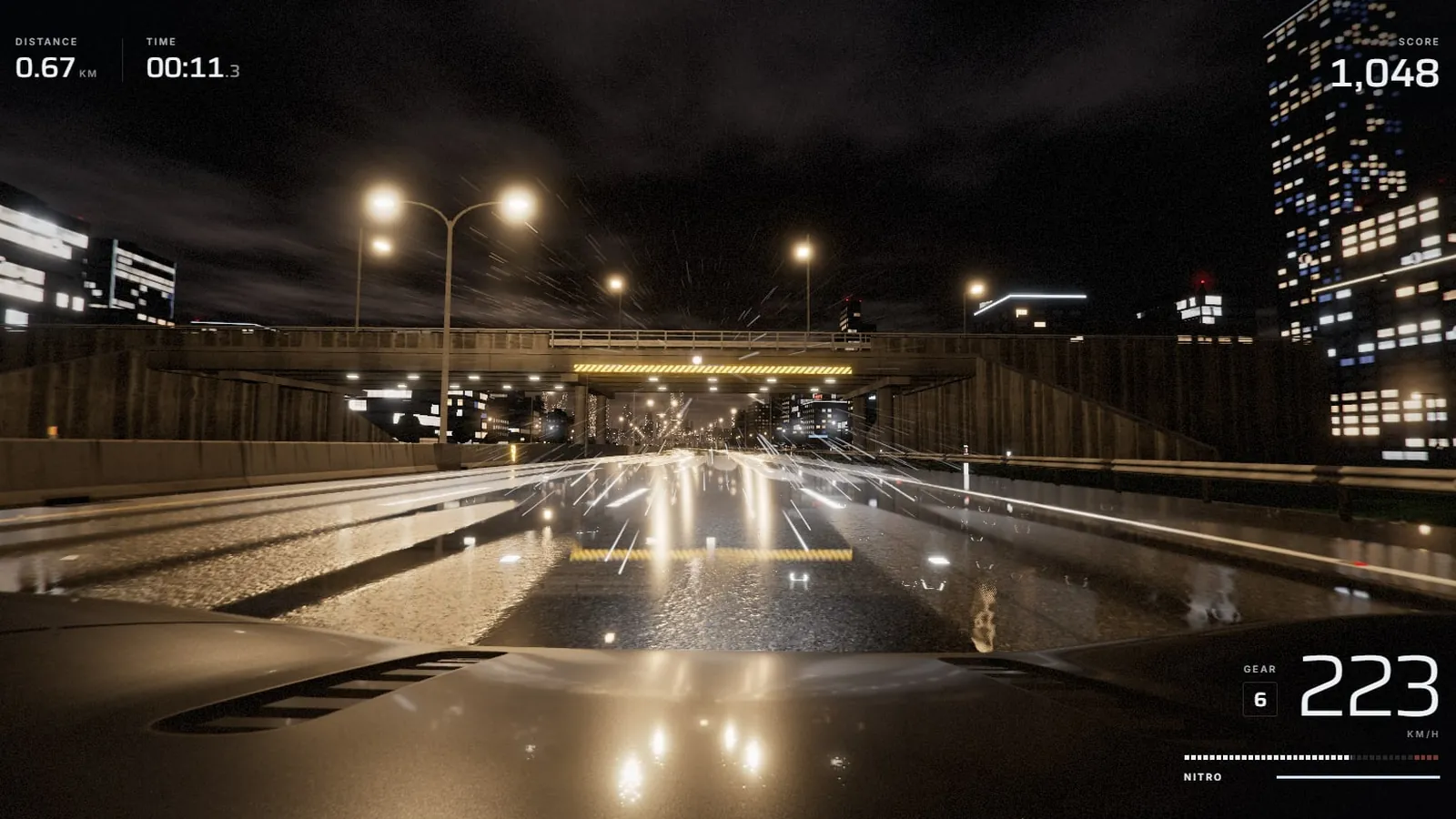
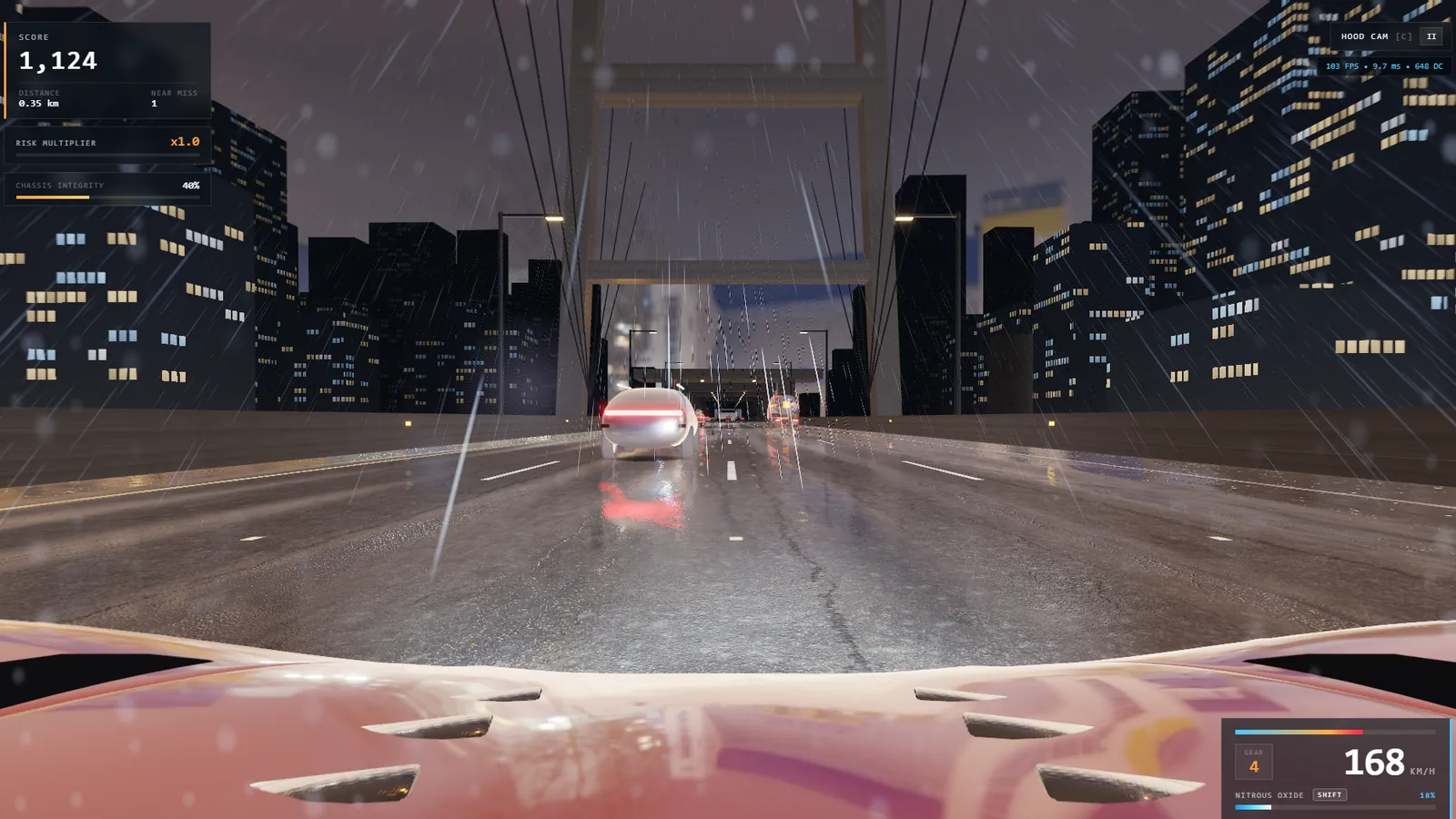
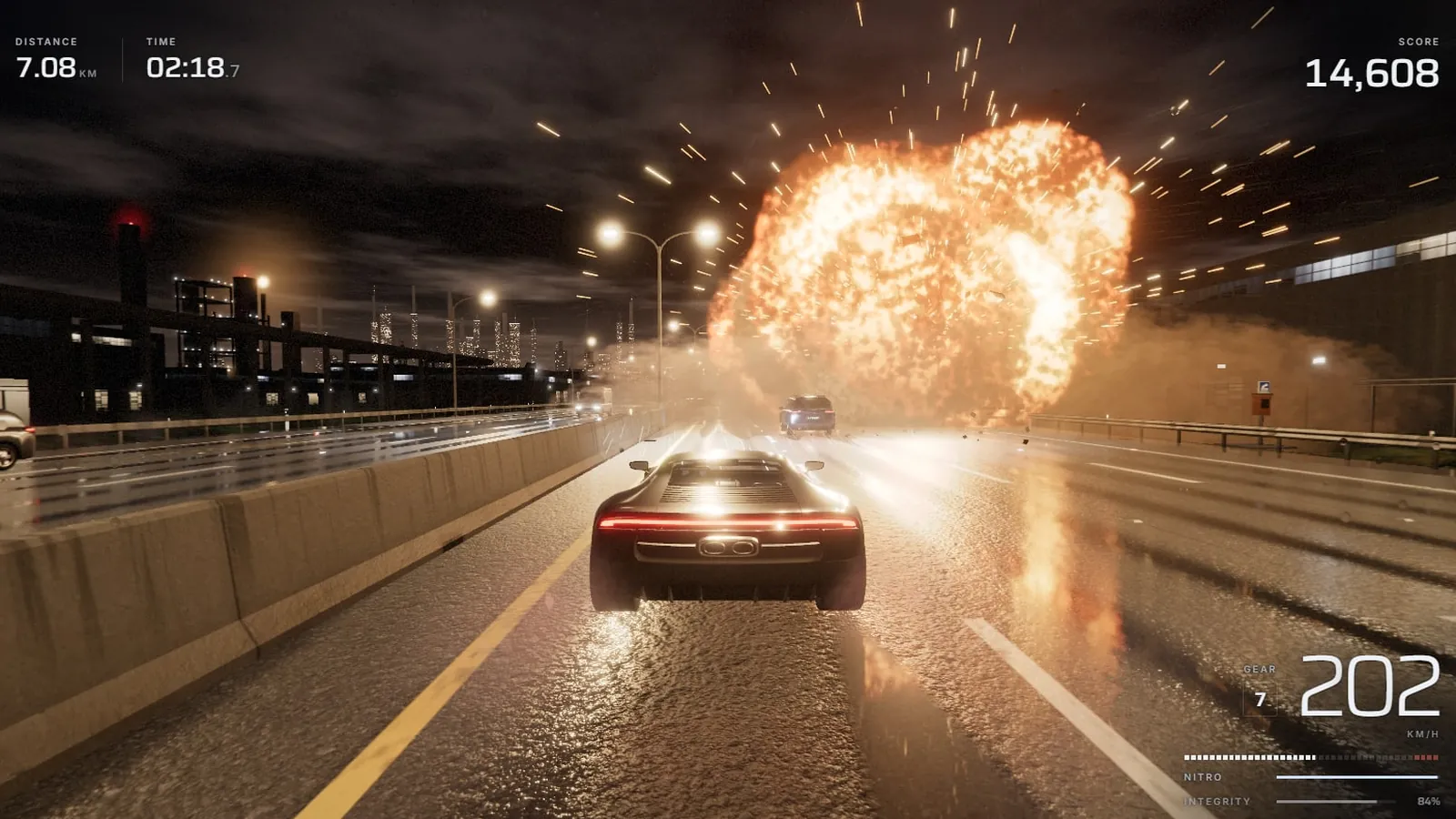
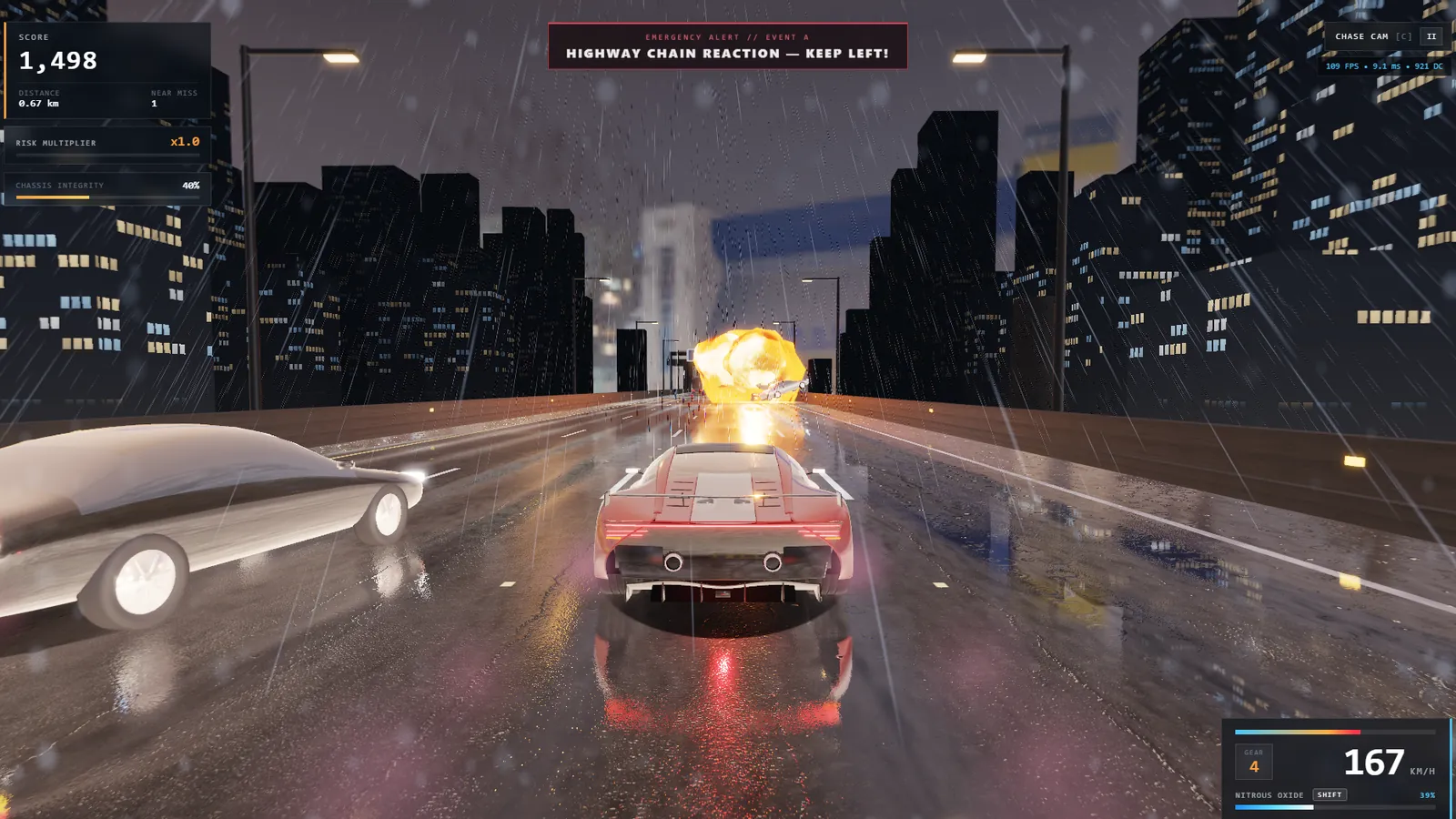

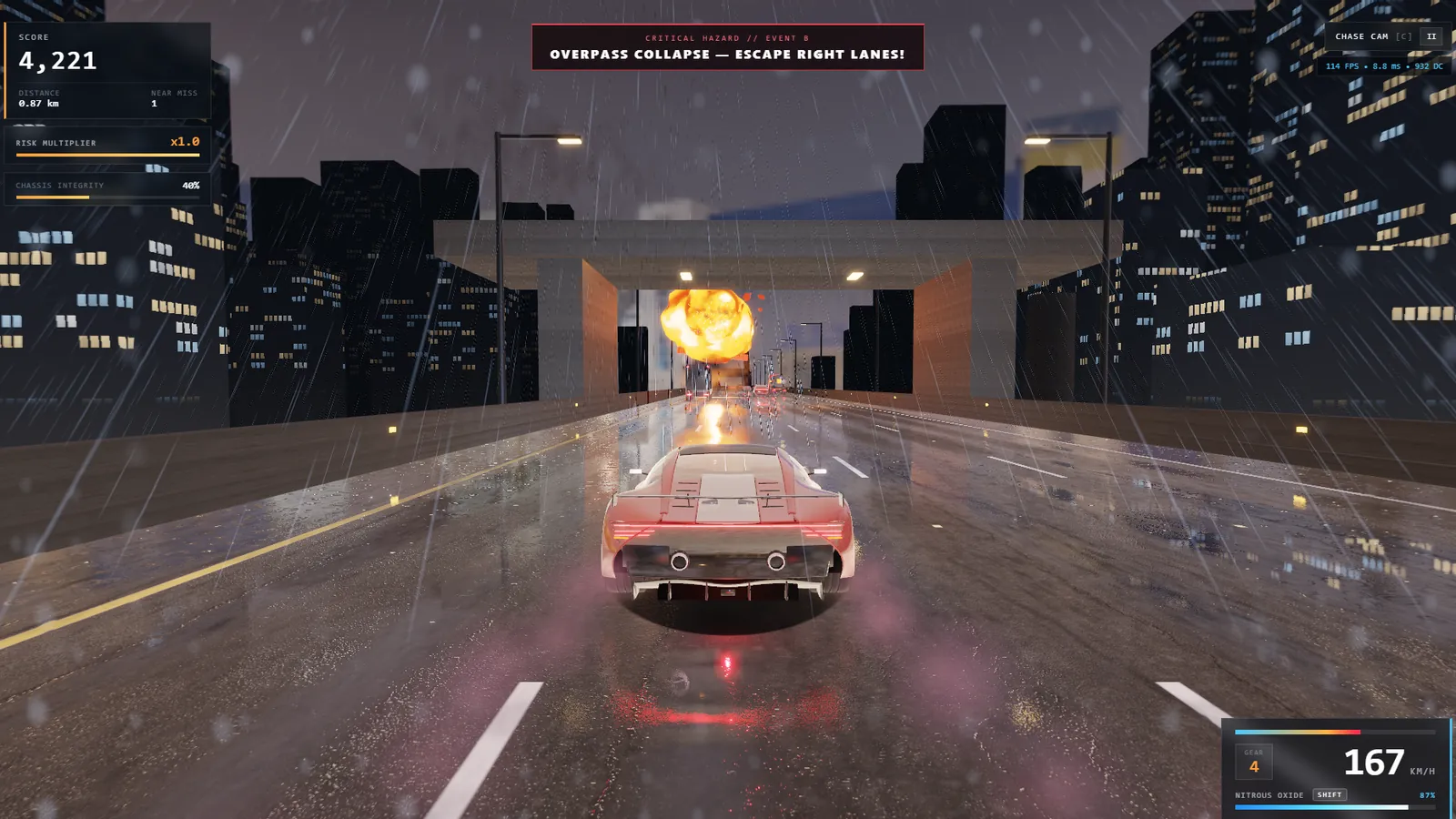
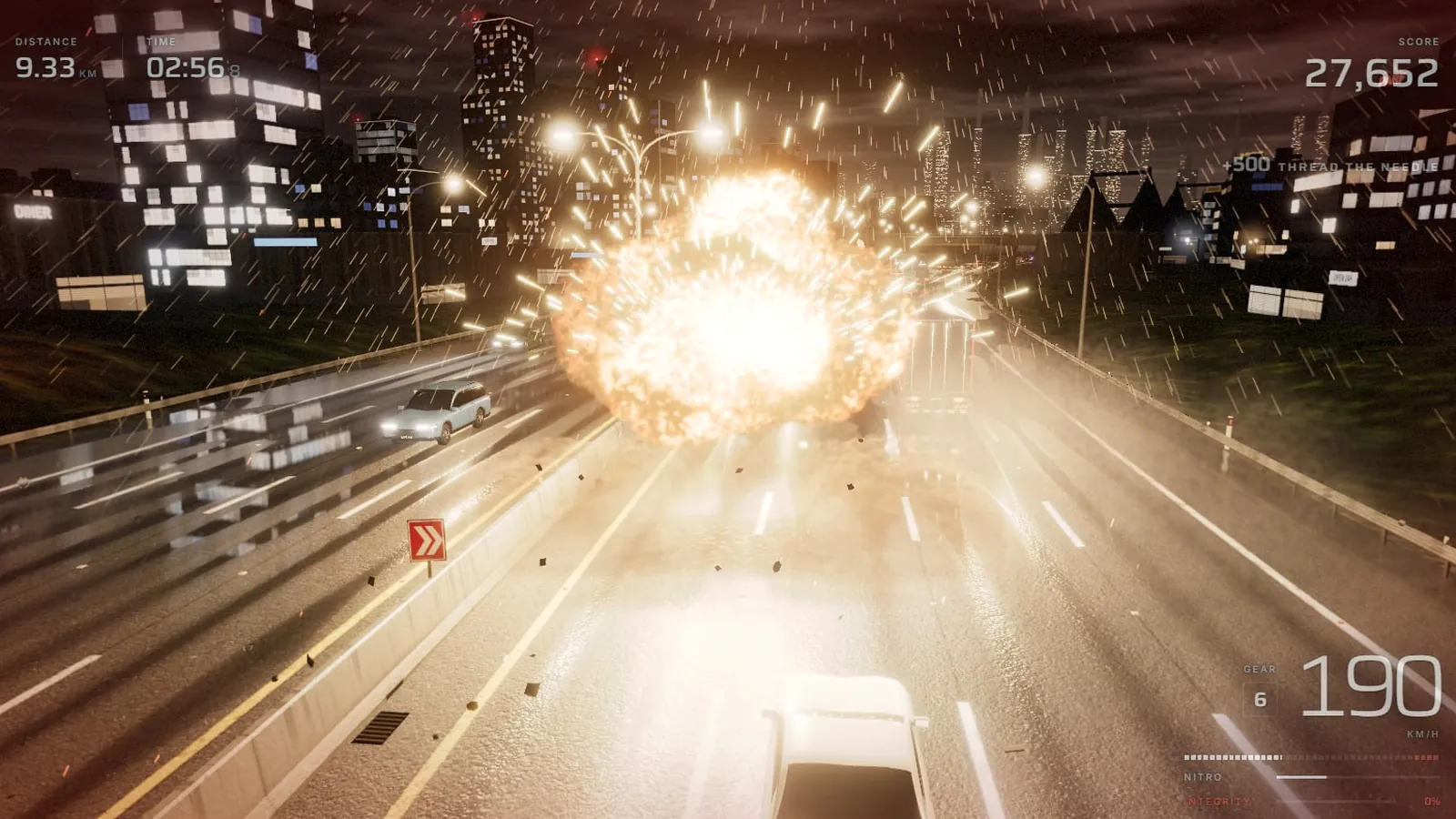
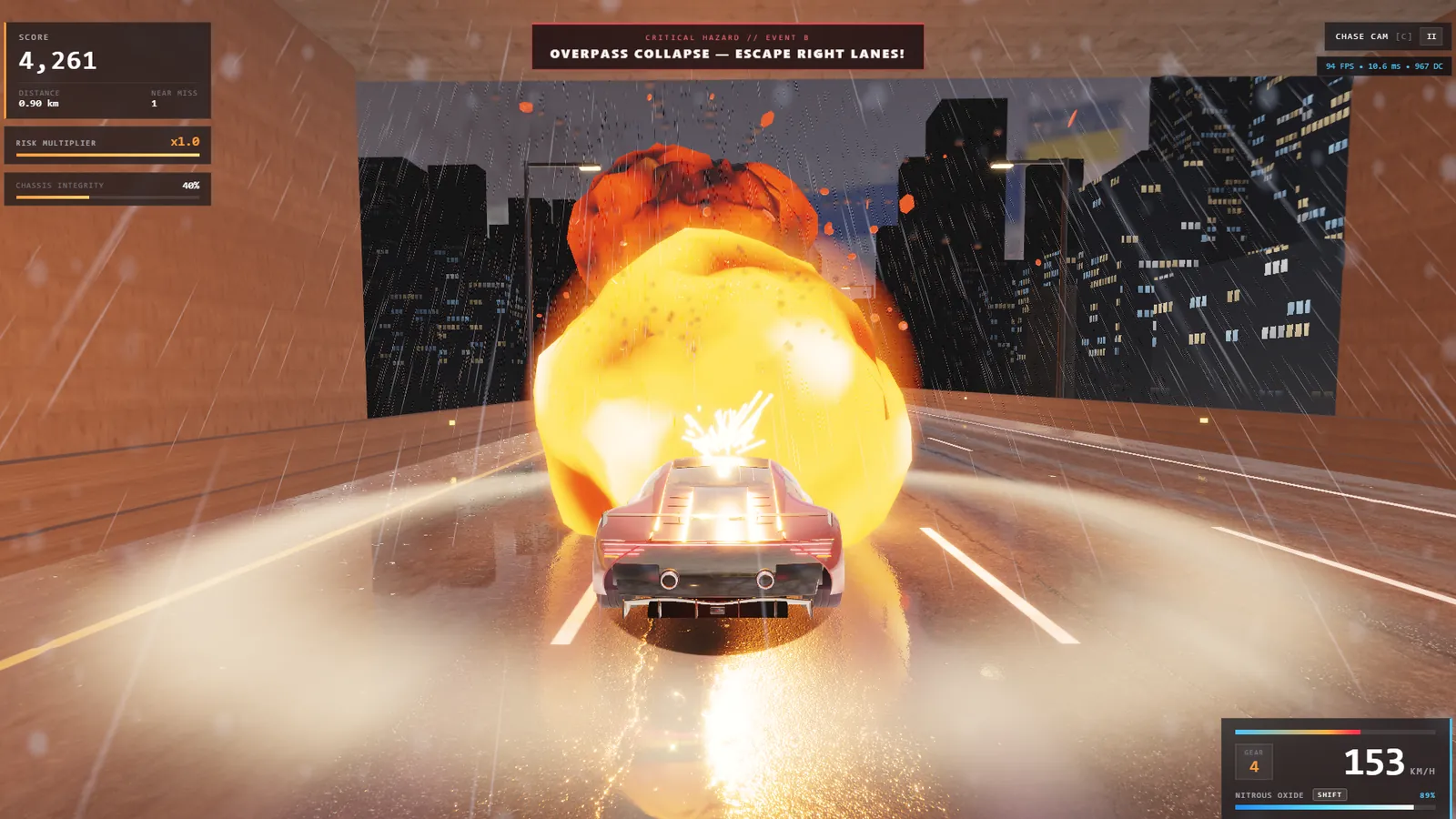
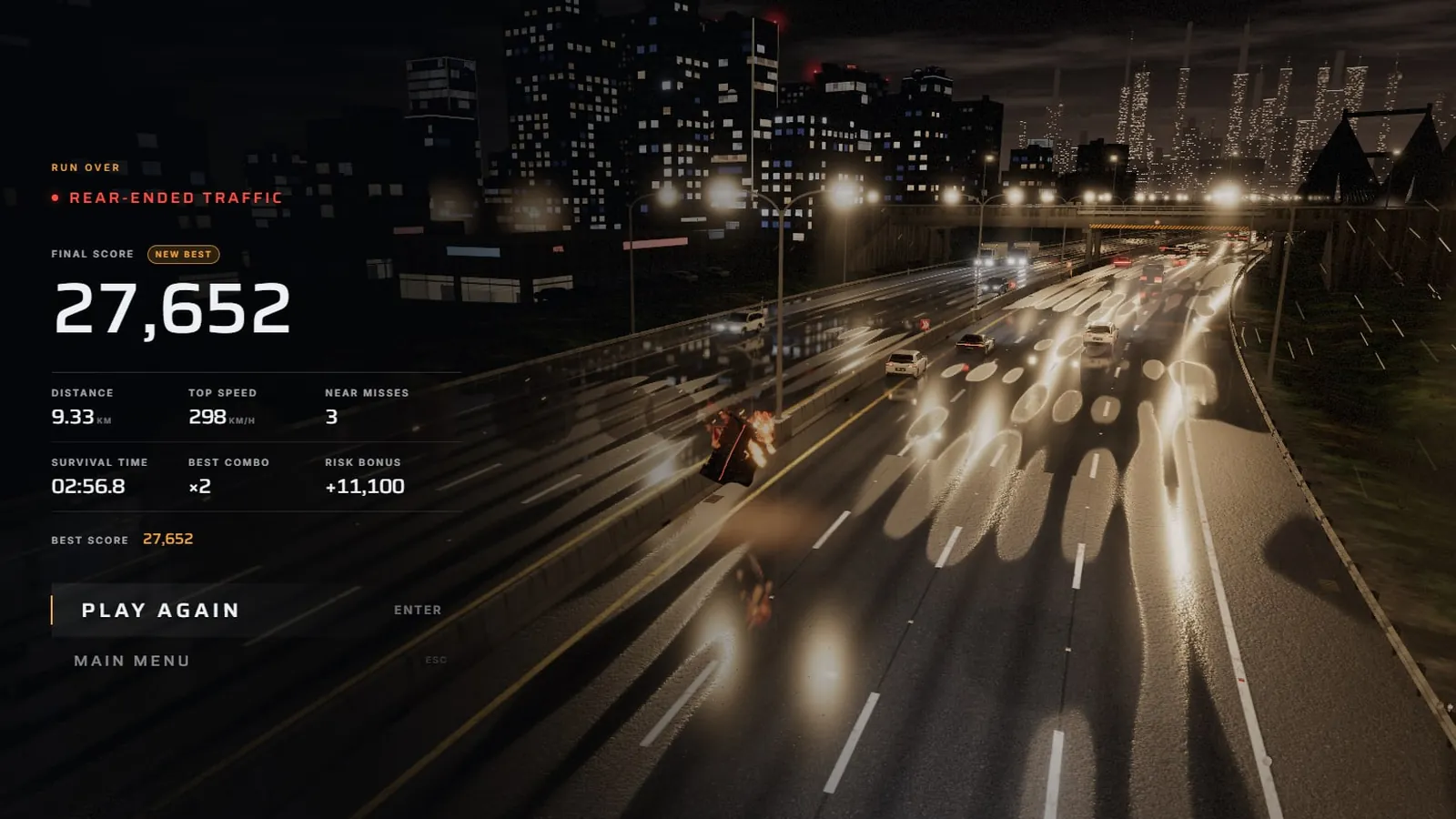
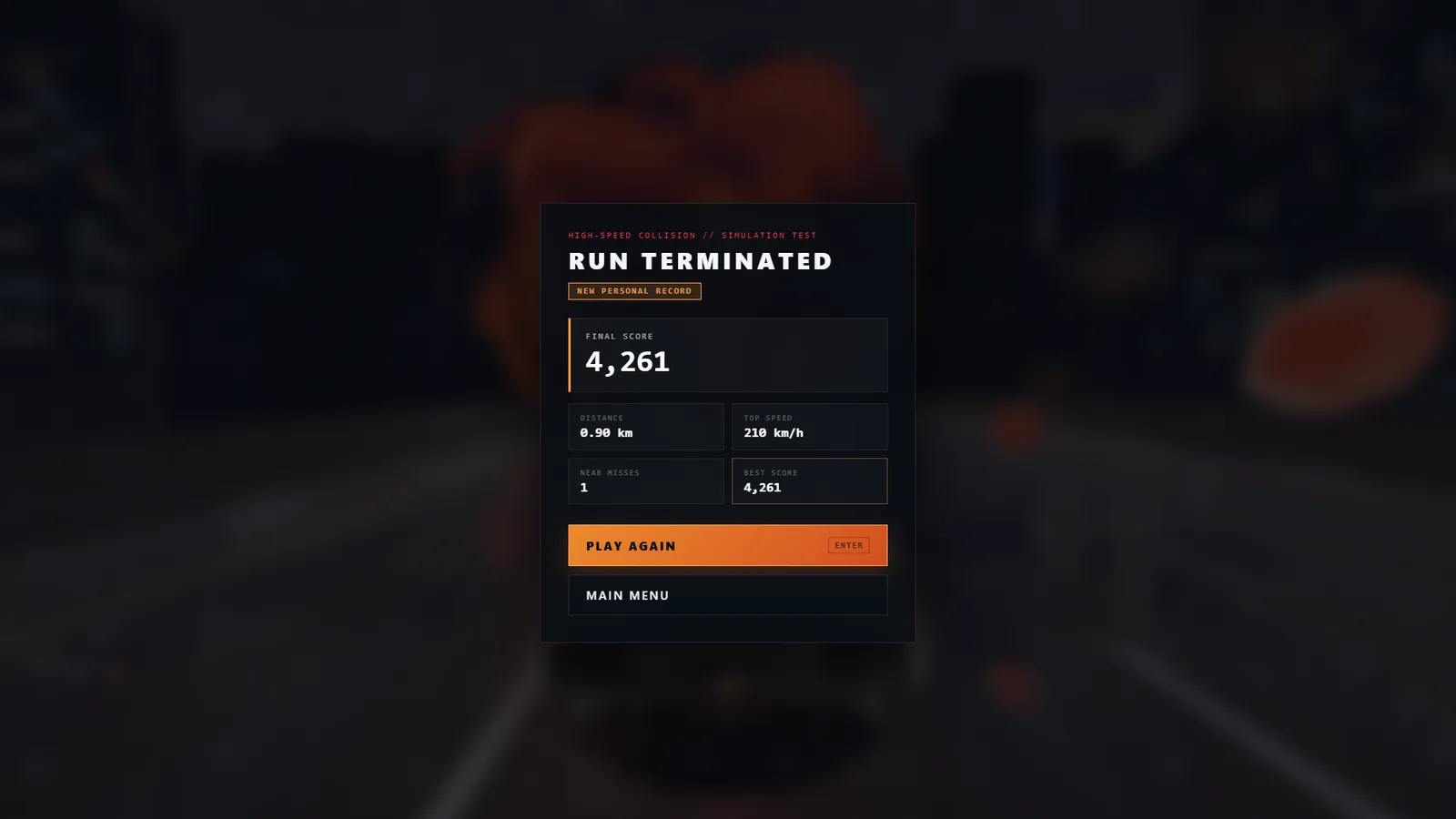
Each agent took these screenshots itself while testing its game, so the moments match but the exact frames don’t.
Frame rates
I measured these on the first builds, before the custom cars, and haven’t measured again. Same PC for both (Ryzen 7 5700X, RTX 4060 Ti, 1920×1080, vsync off, Chrome). I ran each game twice, one after the other. Fable used its own benchmark, a fixed camera path through the city. Gemini used its own test script, which samples FPS while driving, and its ULTRA number comes from the “ULTRA + Nitro” scene.
Frames per second at each quality preset
First builds, before the custom cars. Lowest and highest of two runs. Higher is better.
- Gemini 4 Carbon
- Claude Fable 5.2
Show as a table
| Preset | Gemini (fps) | Fable (fps) |
|---|---|---|
| LOW | 204–257 | 285–410 |
| MEDIUM | 108–126 | 170–250 |
| HIGH | 118–147 | 121–206 |
| ULTRA | 141–149 | 187–192 |
Both games stayed above 100 fps at every preset. The presets don’t come out in order, though. Gemini is slowest on MEDIUM, and in both games the worst ULTRA reading is better than the worst HIGH one. I think that says more about my measuring than about the games. Each game was measured with its own tool on its own stretch of road, and the PC wasn’t completely idle. Read these as rough ranges.
My take
Gemini 4 Carbon is a lot cheaper, and what it built is decent. But there’s still a clear gap between it and Fable. At its current price I wouldn’t run Fable on its own for a whole project. I’d use it as the lead that makes the decisions and hand the actual coding to Opus or Sonnet. Set up like that, it could be really efficient. Right now it looks like Anthropic’s models don’t have a real rival.
Before you draw conclusions
- This isn’t a benchmark. Each model got one attempt, and a second run could go differently.
- The setups differ. Gemini was one agent in its CLI. Fable was a lead agent with Opus 5.5 helpers.
- Both costs are estimates, for the reasons above.
- More code doesn’t mean a better game. The line counts are only there to show size.
Play them
Both games are built from their own repositories at the commits below and served from this site without changes.
You need a desktop browser with WebGL2 and a keyboard. I only tested in Chrome. There are no touch controls.
Credits
Both player cars and all the traffic were made by the models themselves. The textures are CC0, from Poly Haven in both games and also from ambientCG in Fable’s. Fable’s game ships the Saira and Inter fonts under the SIL Open Font License. You can see the full asset lists for Gemini and Fable.
Notes. Work was paused whenever usage limits ran out; the times above only count the time the agents were running.